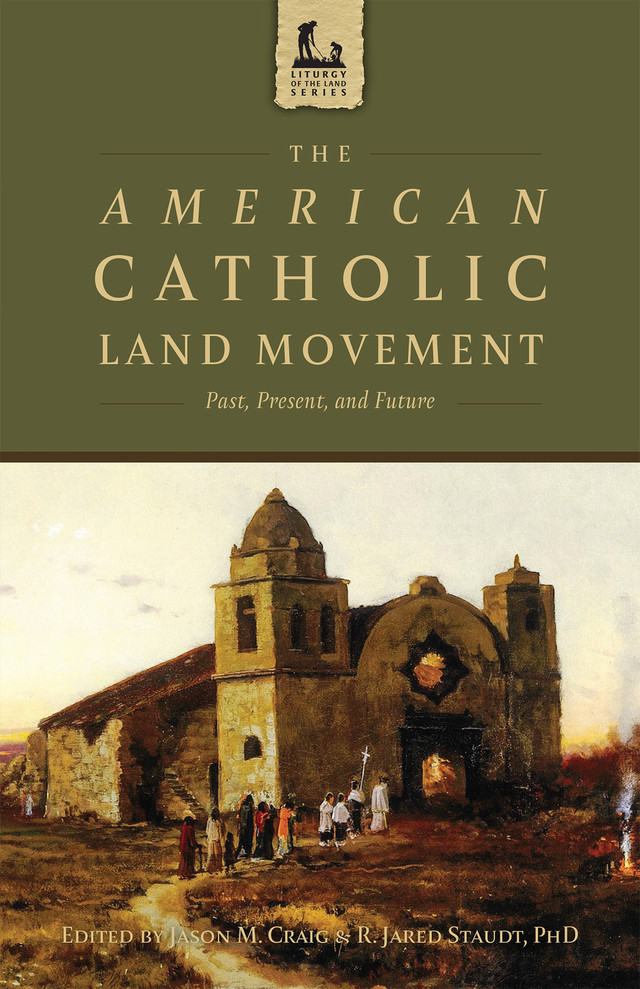
The American Catholic Land Movement: Past, Present, and Future
by R. Jared Staudt PhD, Jason M. Craig
Virtue scores
Review
This examination of Catholic agrarian movements traces the historical development of land-based Catholic communities in America, from early settlement patterns through contemporary intentional communities. The author argues that Catholic social teaching naturally supports small-scale farming, craft work, and rural community life as alternatives to industrial capitalism and urban anonymity. The book documents specific communities, their successes and failures, and offers practical guidance for modern Catholics considering similar paths. Written for Catholics dissatisfied with suburban consumer culture, it presents agrarian life not as nostalgic retreat but as authentic response to papal encyclicals on work, family, and social justice. The audience includes families seeking more integrated lifestyles, parish leaders exploring community development, and students of Catholic social thought. - **Created**: Affirms the fundamental goodness of human stewardship over creation, recognizing that persons are designed for productive work that connects them directly to God's material gifts rather than abstract economic systems. - **Fallen**: Addresses how industrialization and urbanization have severed the natural bonds between families, work, and local community, creating alienation from both neighbor and creation. - **Redeemed**: Points toward restoration through integrated communities where prayer, work, and family life form a unified whole, allowing grace to permeate daily labor and social relationships. - **Prudence (civic wisdom)**: Trains practical judgment about economic choices and community formation, helping readers evaluate their participation in broader social and economic systems. This work stands in interesting tension with Douglas Hyde's call to move Catholics beyond "ghetto mentality." Where Hyde urged Catholics to engage mainstream institutions as transformative leaders, this agrarian vision suggests creating alternative communities. Both authors share concern about Catholic withdrawal from broader influence, but propose opposite solutions—Hyde through institutional engagement, this work through prophetic alternative witness.
✓ Strengths
- ✓Affirms the Created dimension through recognition of humanity's natural relationship with the land as stewards rather than mere consumers
- ✓Addresses Fallen social disorder by examining how industrial agriculture and urban concentration have disrupted traditional Catholic agrarian communities
- ✓Points toward Redeemed community through concrete models of Catholic land-based living that integrate work, prayer, and family life
- ✓Develops prudence in civic wisdom by offering practical guidance for Catholics seeking alternatives to mainstream economic patterns
- ✓Strengthens justice through proper relationship with creation and sustainable stewardship practices
⚠ Considerations
- ⚠May idealize agrarian life without sufficient attention to legitimate urban vocations and modern economic realities
- ⚠Could risk promoting withdrawal from broader civic engagement rather than transformative presence in existing communities