Lectio Divina with the Spiritual Masters: The Book of Daniel with St. Jerome
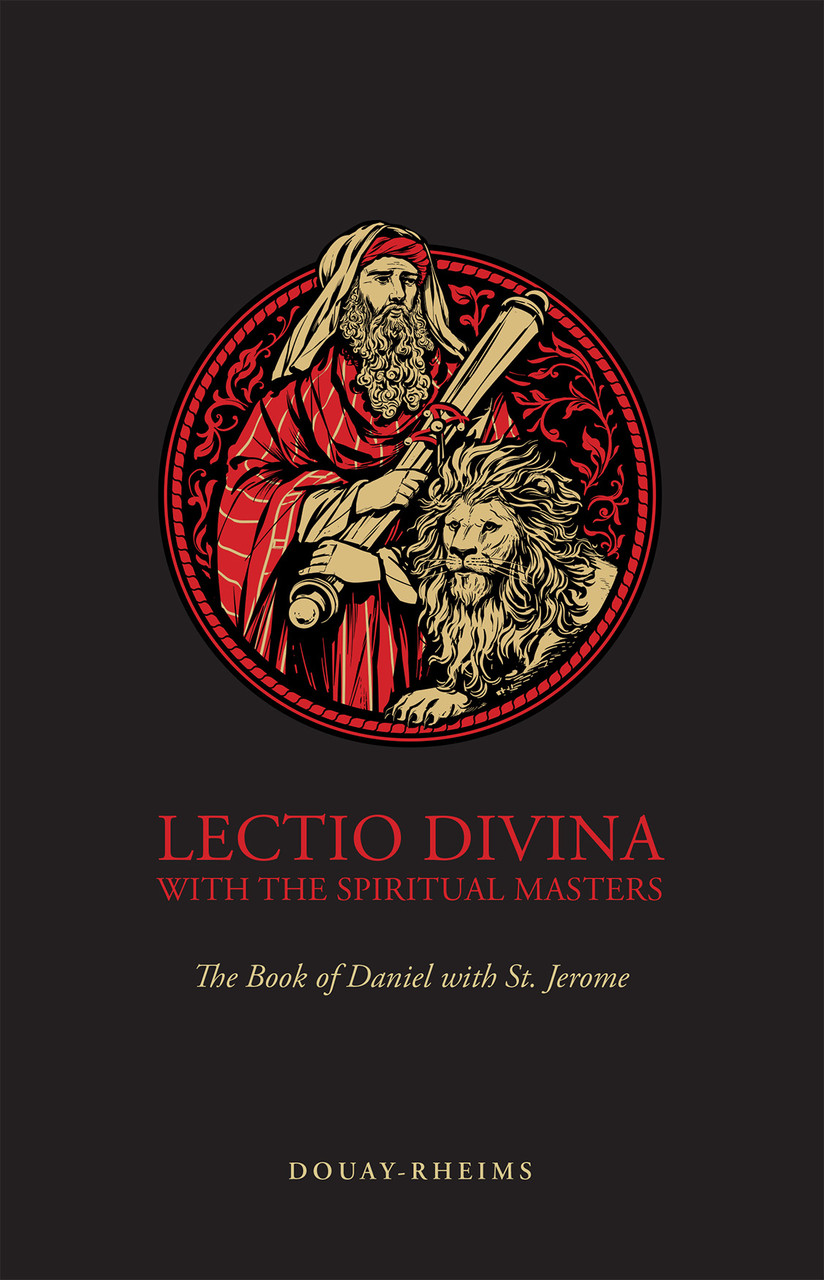
Publisher
TAN Books
Published
May 25, 2026
ISBN
cp-lectio-divina-with-the-spiritual-masters
Virtue scores
Review
SECTION ONE — Bookstore recommendation What does it mean to read Scripture the way the saints did? TAN Books' Lectio Divina with the Spiritual Masters pairs the Book of Daniel with the commentary of St. Jerome, the fourth-century biblical scholar who translated the Vulgate and spent decades in Bethlehem mining the Old Testament for its spiritual marrow. The format is deliberate: the reader moves through Daniel's narratives — Nebuchadnezzar's dream, the fiery furnace, Belshazzar's feast, the lions' den — not as a student of ancient history but as a person learning to pray with a text. Jerome's presence is that of a guide who has already made this journey, pointing out where arrogance meets divine judgment, where faithful endurance is rewarded, and where apocalyptic imagery opens into personal hope. The audience is anyone who has tried lectio divina and found the silence either empty or unstructured — this book provides the patristic scaffolding that turns solitary reading into a conversation across centuries. SECTION TWO — Catholic anthropological reading - **Created**: Daniel himself, as Jerome reads him, is a person whose dignity rests not in royal favor but in his orientation toward truth. His refusal to eat from Nebuchadnezzar's table, his insistence on prayer three times daily, his capacity to interpret dreams — all are expressions of the imago Dei operating at full register: intellect and will ordered toward God rather than toward the court. The book treats this original orientation as a given, not an achievement. - **Fallen**: The Babylonian court is the CCMMP's disordered condition rendered architecturally. Belshazzar's feast, with its desecration of the temple vessels, is a clinical portrait of what Aquinas calls disordered desire turned corporate — a whole civilization organized around the pleasures that consume rather than fulfill. Jerome's commentary does not moralize in a detached way; it reads the handwriting on the wall as a diagnostic, naming what happens to a person or a kingdom when worship is redirected toward the self.[^1] - **Redeemed**: The grace-dimension of Daniel is structural: the three young men in the furnace are not saved from suffering but through it, and the one who walks with them in the fire is the figure Jerome consistently associates with the pre-incarnate Word. Lectio with Jerome on these passages becomes an exercise in what John of the Cross would later call passive purification — the soul learning that God's presence does not cancel the furnace but transforms what the furnace means. - **Prudence (memory)**: Jerome's method models the integral virtue of learning from the past with unusual discipline. He reads Daniel against the Psalms, against the Prophets, against the New Testament — demonstrating that Christian wisdom is not accumulated privately but recovered through attentive reading of what God has already done. The book trains this habit by structuring each lectio unit so that the reader's memory is exercised, not bypassed. - **Justice (devotion)**: The twice-daily rhythm suggested by the Spiritual Masters format mirrors the Divine Office's logic — that prayer is a structured act of justice toward God, not merely an emotional event. Jerome's own commentary on the spiritual yearning of the baptized, his image of the deer longing for running water, appears in the Office of Readings alongside Daniel[^2] and gives the book's method a liturgical anchor that most private prayer aids lack. SECTION THREE — Conversation with the canon The retrieved passages from the Office of Readings place this book in direct conversation with the liturgical tradition it draws from. Jerome's[^2] homily on baptism and spiritual longing, where he uses the image of a deer seeking water to describe the soul's orientation toward God, is the same hermeneutical instinct at work in his Daniel commentary: Scripture is read as a record of desire, specifically the desire of a person made for God who must navigate a world organized against that desire. His commentary on Ecclesiastes, also retrieved in the Office of Readings context, reinforces this: Jerome distinguishes material from spiritual sustenance not as an abstract contrast but as a practical diagnostic for where the soul's attention is actually resting.[^3] Taken together, these passages suggest that what this TAN volume transmits is not simply Jerome's exegesis but his contemplative anthropology — a way of reading that assumes the reader is already on the journey Daniel describes and needs guidance, not information. ## References 1. (DMU video lecture). *Office of Readings — Book of Daniel, Writing on the Wall*. Segment 4. — 'The passage illustrates God's ultimate authority over earthly kingdoms and the consequences of impiety and arrogance.' 2. (DMU video lecture). *Thursday Office of Readings — Patristic homily on baptism and spiritual longing*. Segment 4. — 'Jerome interprets the three fountains (Father, Son, Holy Spirit) as sources of grace and uses the image of fishermen rescuing souls.' 3. (DMU video lecture). *Wednesday Office of Readings — Patristic Commentary and Concluding Prayers*. Segment 5. — 'True satisfaction comes through knowledge of Christ and spiritual aspiration.'
✓ Strengths
- ✓Joins scriptural reading and patristic commentary in a single contemplative act, so the reader is not merely studying Daniel but learning to inhabit the text the way Jerome did — as a site of divine encounter.
- ✓The Book of Daniel's alternation between court-narrative and apocalyptic vision offers a concrete field for practicing lectio: the reader trains attention on how God judges earthly arrogance (Belshazzar's feast) and sustains faithful endurance (the furnace, the lions' den), two movements that are anthropologically prior to any abstract doctrine.
- ✓Jerome's commentary models docility — the integral virtue of receiving wisdom from a tradition rather than generating it independently — by demonstrating how Scripture illuminates itself when read within the Church's living memory.
- ✓The format of the Spiritual Masters series grounds personal prayer in the Church's liturgical rhythm, linking private lectio to the communal Office of Readings and thereby resisting the individualism that often privatizes contemplation.
- ✓Because Daniel is explicitly a book about fidelity under imperial pressure, the patristic commentary gives readers a historically tested grammar for holding theological conviction in environments hostile to it.
⚠ Considerations
- ⚠The Spiritual Masters series format can move quickly past the literal-historical sense of Daniel in favor of spiritual application; readers who need grounding in the critical-historical context of the Maccabean period may find the text insufficient on its own.