Virtue scores
Review
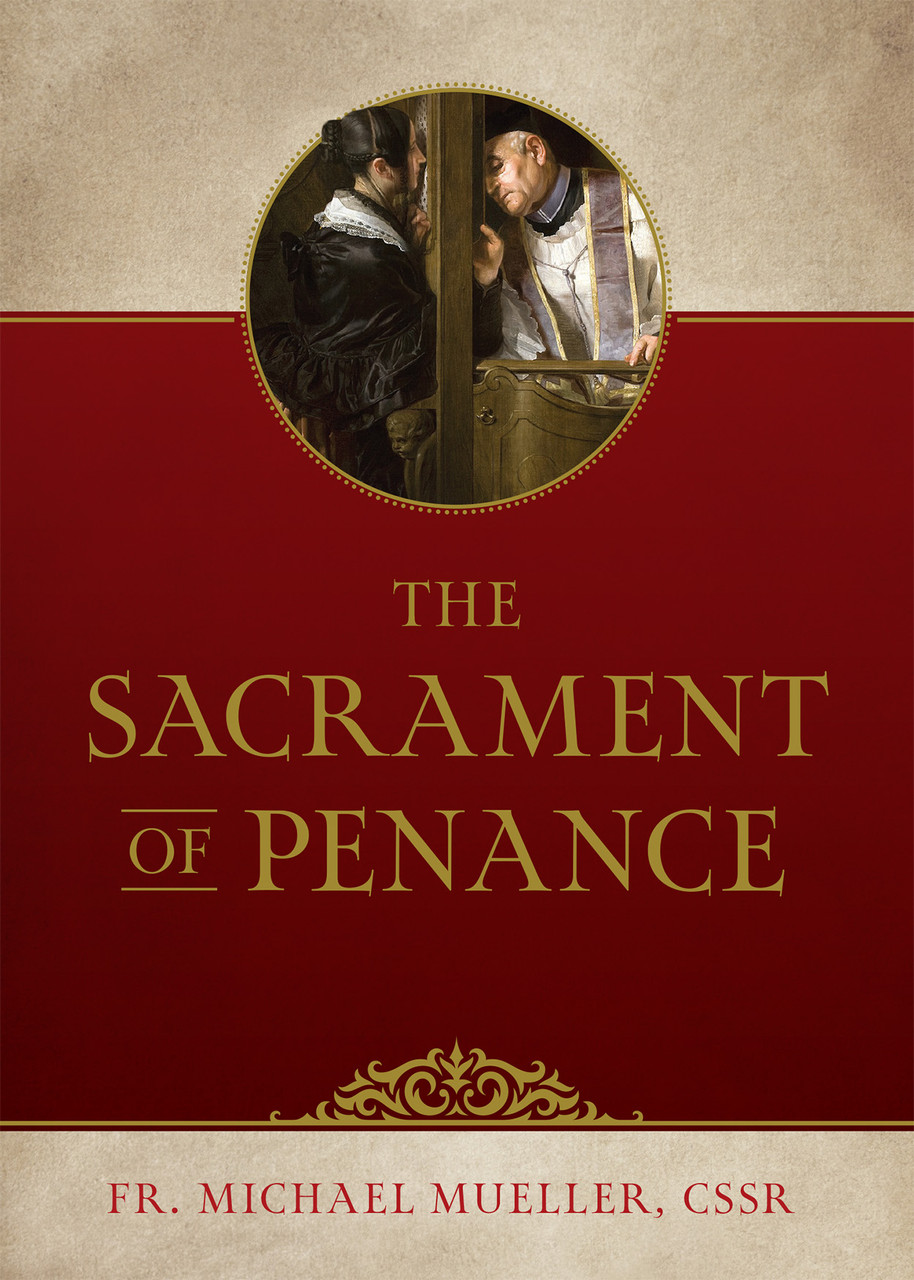
SECTION ONE Most Catholics who go to confession understand it, at some level, as a transaction: sins in, absolution out. Fr. Mueller's *The Sacrament of Penance* pushes against that reductive reading by taking the rite with full theological seriousness — examining its sacramental structure, its matter and form, the role of the priest as minister of Christ, its necessity for salvation, and its proper relationship to the other sacraments. The book belongs to a tradition of systematic sacramental theology rather than devotional literature, and its intended audience is any Catholic who wants to understand what is actually happening in the confessional, not merely what to say there. Readers who feel vaguely that confession matters but cannot articulate why will find here a rigorous account rooted in classical Catholic teaching. TAN's editorial track record makes this a reliable choice for parish study groups, seminarians, or any reader moving from rote practice toward informed participation. SECTION TWO - **Created**: The book's treatment of Penance as a genuine sacrament — one that involves both the bodily acts of the penitent and the spoken formula of the priest — affirms the unity of body and soul at the heart of Catholic anthropology. Grace is not transmitted to a disembodied spirit; it comes through ceremony, gesture, and word, precisely because the human person is an embodied being whose interior conversion finds outward expression. - **Fallen**: The sacrament of Penance exists because sin is real and its damage to the soul is real. The book addresses concupiscence and moral disorder not as psychological dysfunction but as a theological category requiring a theological remedy — absolution — that no amount of self-help or moral effort can substitute. The priestly ministry of absolution is the Church's response to the persistent condition of fallenness, not merely to discrete acts of wrongdoing. - **Redeemed**: Penance is, in its deepest logic, a sacrament of restoration. The book situates absolution within the Redemption won by Christ and applied through the Church's sacramental economy, so that confession is not a return to a neutral baseline but an encounter with transforming grace. The penitent who approaches well-disposed receives not only forgiveness but an increase of sanctifying grace proportional to those dispositions. - **Justice (religion/worship)**: The book's central virtue concern is the virtue of religion — the specific act of justice by which human beings render God what is due. Penance, on this account, is not self-therapy; it is an act of worship, an acknowledgment of God's sovereignty over the moral order and of the human person's accountability before it. - **Prudence (docility)**: By laying out the classical questions — Is Penance a sacrament? What is its matter? What is its form? Is it necessary for salvation? — the book trains the reader in the kind of docility that receives the Church's teaching not as arbitrary rule but as reasoned wisdom. This is formation in theological judgment, not mere catechetical compliance. SECTION THREE Aquinas[^1] in the *Summa Theologiae III*, arguing that the sacrament of Penance is constituted by ceremonies that both signify and effect a holy reality — the penitent's outward acts signifying interior conversion, and the priest's words signifying God's forgiveness — provides the precise scholastic scaffolding on which any serious treatment of this sacrament rests.[^2] Royo Marin[^3], in *Teologia de la perfeccion cristiana*, extends that Thomistic account in a direction this book may complement: he insists that the sacrament's sanctifying effect is not exhausted by absolution of guilt, but varies in depth according to the penitent's interior dispositions — the soul that approaches with greater contrition and recollection receives proportionally more grace, much as metal conducts heat better than clay. ## References [^1]: Aquinas, T. (1947). *Summa Theologiae III* (Fathers of the English Dominican Province, Trans.). Benziger Bros. Q. 84, art. 1. [^2]: Aquinas, T. (1947). *Summa Theologiae III* (Fathers of the English Dominican Province, Trans.). Benziger Bros. Q. 84, art. 1, p. 785. [^3]: Royo Marin, A. (n.d.). *Teologia de la perfeccion cristiana*. [Publisher unknown]. Section 308.
✓ Strengths
- ✓Treats Penance as a genuine sacrament — not merely a spiritual hygiene practice — thereby affirming the full sacramental economy of the Church and the concrete mediation of grace through bodily signs and priestly absolution.
- ✓Grounds the theology of Penance in Aquinas's tripartite sacramental structure (sacramentum tantum, res et sacramentum, res tantum), giving readers a coherent metaphysical account of why the sacrament effects what it signifies.
- ✓Takes seriously the dispositions of the penitent as the material through which grace operates ex opere operato, equipping readers to approach confession not as a formality but as an encounter that proportionally transforms the soul.
- ✓Addresses the relationship of Penance to the other sacraments, situating the rite within the broader architecture of the Christian life rather than isolating it as a stand-alone guilt-management mechanism.
- ✓Published by TAN Books, whose editorial tradition favors fidelity to the Magisterium and classical theology, making this a reliable resource for both personal formation and catechetical use.