Virtue scores
Review
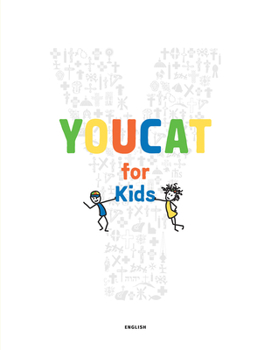
SECTION ONE Most children learn the faith the way they learn everything else: through questions that adults have already decided are answerable. YOUCAT for Kids takes that instinct seriously. Published by Ignatius Press as a children's adaptation of the widely used YOUCAT catechism, this book sets out to give children roughly ages six through ten a first, structured encounter with Catholic Christian belief — who God is, what the sacraments do, how to pray, and why any of it matters to a child waking up on an ordinary Tuesday. The format is deliberately spare: short questions, short answers, bright illustrations. The intended audience is not the teenager wrestling with doubt but the younger child who is still forming the very categories through which belief will later be questioned or confirmed. Parents and catechists working through a first communion preparation program, or simply wanting a household reference that the child can return to alone, will find it structured for exactly that use. It does not assume a theologically literate household; it assumes a willing one. SECTION TWO - **Created**: The book grounds its opening in the child's own identity as someone made and loved by God — an early, concrete instantiation of the imago Dei. Rather than beginning with abstract theology, it begins with the child as subject, which affirms the dignity of personhood at the level a seven-year-old can grasp. This is not decorative; it gives the child a stable anthropological starting point before moral instruction begins. - **Fallen**: The catechism format requires the book to name sin, and a children's adaptation must do so without either minimizing disorder or producing scrupulosity. Where the book addresses wrongdoing and the need for confession, it is working with the reality that children already experience disordered desire — wanting what they should not take, saying what they should not say — and need a vocabulary for it that is honest without being crushing. - **Redeemed**: The sacraments receive sustained attention, and the book treats them as points of actual contact with grace rather than as ceremonies to be completed. First Communion and Reconciliation are presented in terms of what they do to and for the child, which positions redemption not as a future theological state but as something available in the present tense of childhood. - **Prudence (docility)**: The question-and-answer structure is not merely a mnemonic device. It rehearses the posture of a learner — what Aquinas identifies as docilitas, the readiness to receive what one does not yet know. A child who practices asking and holding answers is forming the interior habit of teachability that later prudential judgment depends on. - **Justice (worship and prayer)**: By giving the child formulas for prayer alongside explanations of why those formulas exist, the book trains not just religious behavior but the interior act that gives the behavior its moral weight. It aims to produce not rote compliance but the beginnings of devotion. SECTION THREE Peterson[^1], in his lectures on Genesis, argues that a well-told story captures a child's attention in a way that integrates learning more completely than proposition alone — 'if you get the story right for a child you can capture the child's interest and you can integrate almost any form of learning into the story' — which raises the productive question of whether catechism-format books, which trade heavily in propositions, are best used alongside narrative rather than instead of it. YOUCAT for Kids is not a storybook, and that is both its strength and its limit: propositions held by a child who has no story to attach them to remain propositions. Hayes[^2], working from relational frame theory, demonstrates that children as young as fourteen months derive unstated relationships from trained ones — that once a child knows a word names a thing, they reverse the relation spontaneously and without instruction — which suggests that the doctrinal language a child internalizes early does more relational work than adults typically account for; the name 'Eucharist' learned at seven is already generating a network of associations the child will carry into adolescence. Taken together, these perspectives suggest that YOUCAT for Kids is most effective when it functions as a reference structure within a richer formation environment, not as the environment itself. ## References 1. Peterson, Jordan (DMU video lecture). *The Sins of Adam*. — 'if you get the story right for a child you can capture the child's interest and you can integrate almost any form of learning into the story' 2. Hayes, Steven (curated reading). *Get Out of Your Mind Into Your Lives*. — 'humans will reverse the direction of what they learned... they realize not only that the picture refers to the word, but that the word also refers to the picture'
✓ Strengths
- ✓Addresses children at the level of their actual cognitive development, using concrete images and simple declarative sentences to carry doctrinal content — a pedagogical choice that respects the unity of body and soul by engaging the imagination before the intellect.
- ✓Grounds the child's identity in the imago Dei from the opening questions, giving a theological anthropology accessible to a seven-year-old before formal catechism language is introduced.
- ✓Treats the sacraments not as abstract rites but as concrete encounters with grace, which places healing and transformation within reach of ordinary childhood experience.
- ✓Frames moral formation through the language of friendship with God, a relational framing that gives virtue a motivational anchor rather than presenting it as rule-following.
- ✓The question-and-answer format actively requires the child to exercise docility — Aquinas's integral part of prudence — by positioning the reader as a learner who must receive and hold truth before acting on it.
⚠ Considerations
- ⚠A catechism format can flatten the affective dimension of faith if the answers are presented as closed rather than as openings onto mystery; without narrative or story-based integration, some children may retain propositions without forming the interior dispositions those propositions are meant to produce.