Virtue scores
Review
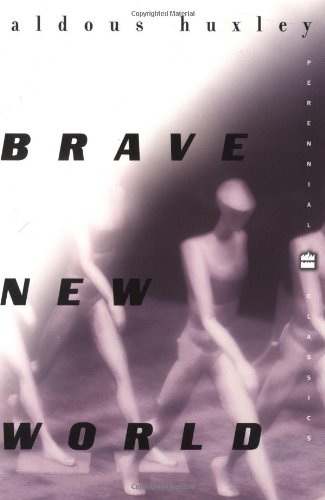
SECTION ONE Almost a century after its publication, Aldous Huxley's Brave New World remains the most precise fictional anatomy of a world that has solved unhappiness by abolishing everything that makes happiness meaningful. Set in a London of the distant future, the novel imagines a global civilization — the World State — that has eliminated war, disease, poverty, and psychological suffering through the mass biological engineering of human beings, the universal use of a happiness drug called soma, and the systematic conditioning of every citizen from decanting onward. The result is a society of contented, shallow, promiscuous people who have no capacity for grief, art, religion, or genuine love, and who do not notice the absence of any of these things. Into this world Huxley introduces Bernard Marx, an Alpha who feels vaguely dissatisfied without being able to articulate why, and John the Savage, raised on a Reservation outside the World State, who arrives carrying Shakespeare and longing for the right to be miserable. The novel is less a plot than a debate, and Huxley's real purpose — spelled out in the extraordinary Chapter 17 confrontation between John and the World Controller Mustapha Mond — is to ask what humanity actually loses when it purchases perfect comfort at the price of its own interiority. It is essential reading for anyone who wants to think clearly about freedom, technology, and the ends of human life. SECTION TWO - **Created**: The novel is built on the premise that there is a natural human appetite for beauty, suffering, truth, and God that cannot be engineered away without remainder. John's inarticulate longing — his love of Shakespeare, his desire for Lenina that he cannot reduce to casual sex, his demand for the right to be unhappy — is Huxley's dramatic argument that the imago Dei is not a cultural overlay but a structural feature of the person. The World State's failure to produce a single contented Alpha who does not sense the hollowness of his contentment is the novel's anthropological evidence. - **Fallen**: The World State is Huxley's portrait of concupiscence institutionalized and rationalized. Disordered desire is not resisted or ordered toward genuine goods; it is simply decoupled from consequence through contraception, soma, and conditioning. The result is not freedom from concupiscence but concupiscence with all friction removed — which Huxley shows to be a more total bondage than the original disorder. Bernard and Helmholtz Watson feel the pull toward something more without the intellectual or spiritual equipment to name it. - **Redeemed**: The novel is weakest here, and that weakness is itself instructive. John the Savage attempts a kind of self-redemption through suffering and asceticism — whipping himself on the lighthouse roof — but without a community, a sacramental life, or any account of grace, his self-purification collapses into spectacle and suicide. Huxley shows, almost despite himself, that the Redeemed state cannot be achieved by individual willpower alone; the novel is a photographic negative of what it cannot name. - **Prudence (foresight)**: The novel's pedagogical power lies in its operation on the reader's imagination before the argument is stated explicitly. By the time Mustapha Mond explains the logic of the World State in Chapter 17, the reader has already felt its costs in the texture of every previous chapter. This is formation through aesthetic experience — the reader's practical wisdom is trained by being made to inhabit a world where it is impossible. - **Justice (truthfulness)**: Huxley's insistence on telling the truth about what a pleasure-maximizing civilization would actually look like — including its sexual mores, its disposal of the elderly, and its management of the few citizens who resist conditioning — gives the novel an intellectual honesty that distinguishes it from simpler dystopian warnings.
✓ Strengths
- ✓Huxley's World State is a sustained philosophical thought experiment on what happens when the created dignity of the person is reduced to biological function and social utility — the novel dramatizes, with precision, the anthropological cost of severing the soul from its transcendent end.
- ✓The character of John the Savage embodies the conflict between a person's natural longing for beauty, suffering, and meaning — what Aquinas calls the appetite for the true good — and a society engineered to eliminate that longing through pleasure management and pharmacological pacification (soma).
- ✓The novel's treatment of freedom is theologically instructive: Mustapha Mond's argument that happiness requires the abolition of God, art, and science functions as an inadvertent proof that authentic human flourishing cannot survive the elimination of transcendence.
- ✓Huxley's critique of conditioning — the Bokanovsky Process, hypnopaedia, and Pavlovian aversion therapy — illuminates the CCMMP's account of habit formation gone wrong: virtue presupposes a rational agent capable of deliberation, and the World State forecloses deliberation by design.
- ✓The novel trains the reader's prudential foresight by making the reader feel the stakes before naming them, which is a more effective pedagogical strategy than abstract argument.
⚠ Considerations
- ⚠Huxley offers no positive anthropology of redemption; John the Savage's only available responses to the World State are romantic primitivism and self-flagellation, leaving the Redeemed pole of the Created-Fallen-Redeemed arc occupied only by negation rather than by any account of grace, sacrament, or virtuous community.
- ⚠The novel contains frank sexual content — including promiscuous behavior presented as social norm, references to orgiastic religious ritual (the Solidarity Service), and erotic episodes — that readers in a Catholic parish context should be prepared for.
- ⚠Huxley's philosophical framework in the novel draws more from D. H. Lawrence and a kind of tragic paganism than from any theistic anthropology; instructors using it in Catholic formation contexts will need to supply the theological counterweight that the text deliberately withholds.